Designing Empathy: Leveraging the Maternity Leave Employee Rights Bundle for Modern HR Tech
In the rapidly evolving landscape of human resources technology and employee experience design, the intersection of legal compliance and user empathy has become a critical focal point. For designers, product managers, and HR tech entrepreneurs, creating digital tools that support employees during significant life transitions is no longer optional; it is a business imperative. This shift has elevated the importance of specialized design assets, specifically the Maternity Leave Employee Rights Bundle, which serves as more than just a collection of graphics. It represents a strategic resource for building applications that navigate the complex emotional and logistical journey of parental leave.
The modern workforce expects digital experiences that are as intuitive as they are informative. When addressing maternity leave employee rights, the challenge lies in translating dense regulatory information into accessible, reassuring, and actionable mobile interfaces. Professionals utilizing this bundle are not merely filling screen space; they are architecting trust. By integrating high-fidelity UI, UX, and GUI vector templates featuring linear color illustrations, creators can bypass the initial friction of conceptualization and focus on delivering value-driven solutions that respect the user's time and emotional state.
The Convergence of Compliance and User Experience
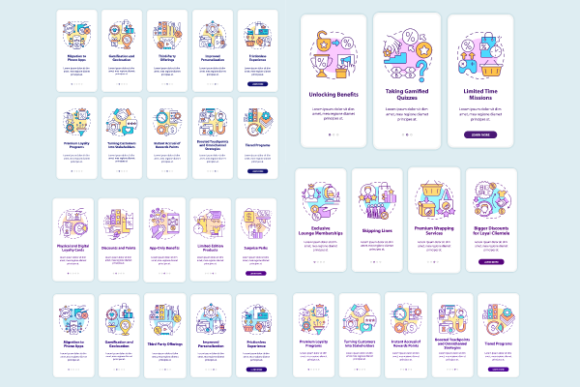
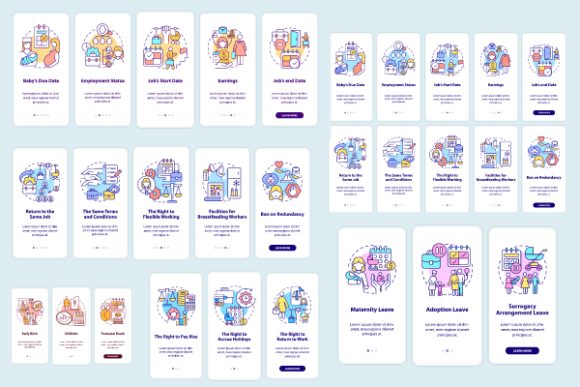
Historically, employee handbooks and policy documents were static, text-heavy PDFs buried in company intranets. Today, the expectation has shifted toward dynamic, mobile-first onboarding experiences. The Maternity Leave Employee Rights Bundle addresses this gap by providing pre-designed mobile app page screens that visualize the return-to-work process. This is particularly relevant as organizations move away from one-size-fits-all HR portals toward personalized employee journeys.
The relevance of this asset collection extends beyond aesthetics. It aligns with broader industry trends where "compliance" is being rebranded as "care." In the consumer technology sector, users have been conditioned to expect seamless onboarding and clear visual hierarchies. Employees now demand the same level of polish from internal tools. When an organization utilizes a professional maternity leave related onboarding mobile app page screen bundle, they signal to their workforce that the company invests in clarity and support. This reduces cognitive load during a period that is already mentally taxing for new parents, transforming a bureaucratic requirement into a supportive touchpoint.
Visualizing the Return-to-Work Walkthrough
One of the most profound aspects of this design collection is its focus on return to work walkthrough steps graphic instructions with concepts. Returning to work after maternity leave is a multifaceted transition involving logistical planning, emotional adjustment, and rights awareness. Text alone often fails to convey the nuance of these steps. Linear color illustrations provide a universal language that transcends literacy barriers and reduces anxiety.
Practical application of these graphics might include:
- Phased Re-entry Timelines: Visualizing a gradual return schedule helps manage expectations between the employee and management.
- Rights Checklists: Interactive or visually distinct checklists ensuring employees understand their protections regarding breastfeeding breaks, flexible hours, and role security.
- Resource Mapping: Flowcharts connecting employees to mental health support, lactation consultants, or legal aid within the app ecosystem.
- Milestone Celebrations: Gentle UI elements that acknowledge progress without being intrusive, fostering a sense of belonging.
These visual components are essential for reducing support tickets and HR inquiries. When information is presented clearly through established UX patterns found in this bundle, employees feel empowered rather than confused. This directly impacts retention rates and employee satisfaction scores, making the design asset a tangible ROI generator for businesses.
Technical Versatility for Diverse Workflows
For freelancers, agencies, and in-house teams, workflow efficiency is paramount. The Maternity Leave Employee Rights Bundle is engineered to integrate seamlessly into various design pipelines. The inclusion of multiple file formats—JPEG, AI, PNG, EPS, and SVG—ensures compatibility across the entire product development lifecycle. Vector formats like AI, EPS, and SVG allow for infinite scalability without quality loss, which is crucial when designing responsive interfaces that must look crisp on everything from budget smartphones to high-resolution tablets.
The use of linear color illustrations reflects current UI trends that favor cleanliness and accessibility. Heavy, realistic 3D renders can sometimes feel distracting or overly playful in serious contexts. Conversely, stark line art can feel cold. Linear color strikes a balance, offering warmth and professionalism simultaneously. This stylistic choice is deliberate, catering to the sensitive nature of maternity leave employee rights while maintaining a modern tech aesthetic.
Furthermore, having editable source files means designers are not locked into a specific color palette or layout. Teams can adapt the templates to match corporate branding guidelines instantly. This flexibility allows for rapid prototyping. Instead of spending weeks illustrating custom icons and screens from scratch, a product team can deploy a functional prototype in days, gather user feedback from actual employees, and iterate faster. This agility is vital in an era where employee needs and regulations change frequently.
Meeting Changing Market Expectations
Why are professionals paying heightened attention to these specific design assets right now? The answer lies in the post-pandemic reshaping of work-life integration. There is a growing recognition that supporting parents is a diversity, equity, and inclusion (DEI) issue. Companies are under pressure to demonstrate tangible support systems, and digital tools are the primary delivery mechanism for that support.
Additionally, the rise of remote and hybrid work models has decentralized the employee experience. Without physical HR offices to walk into, the mobile app becomes the de facto headquarters for parental leave navigation. A poorly designed app can exacerbate feelings of isolation, while a thoughtfully designed one using resources like the Maternity Leave Employee Rights Bundle can bridge the distance. Creators and marketers understand that the quality of these digital touchpoints directly influences employer branding. In a competitive talent market, the sophistication of your internal tools is a selling point for prospective hires evaluating family-friendly policies.
Strategic Sourcing for Quality and Efficiency
In the pursuit of high-quality digital products, sourcing reliable assets is a strategic decision. Time spent reinventing the wheel is time lost on innovation and user testing. This is where specialized providers make a significant difference. BSD studio provides a variety of products, topics and file types so that there’s always something new available for forward-thinking designers. Their catalog acknowledges that niche HR topics require the same level of design rigor as consumer-facing e-commerce or social media apps.
Count on us in search for icons, brochure templates, infographic elements, mobile app screen pages and so much more. This comprehensive approach ensures consistency across different deliverables. An organization might need mobile app screens for the employee portal but also require matching brochure templates for printed welcome kits or infographic elements for email newsletters. Sourcing these from a unified collection guarantees visual coherence, which reinforces brand trust.
Find what you need in our shop to make sure you are saving time on design work while keeping up top quality. This value proposition resonates deeply with today’s lean creative teams. By leveraging pre-built, professionally crafted assets for complex topics like maternity leave, teams can allocate their creative energy toward solving unique business problems rather than drawing generic UI components. It allows small teams to punch above their weight, delivering enterprise-grade experiences without enterprise-grade budgets or timelines.
Future-Proofing Employee Support Systems
Looking ahead, the integration of AI and personalized content in HR tech will only increase the demand for modular, high-quality design systems. As algorithms begin to tailor maternity leave information based on individual employee circumstances, the underlying UI must be flexible enough to accommodate dynamic content. The vector-based, modular nature of this bundle positions it well for future adaptability.
Moreover, as global teams become more common, the need for culturally neutral yet empathetic iconography grows. Linear illustrations tend to travel better across cultures than photographic imagery, reducing the risk of misinterpretation. Investing in versatile design assets now prepares organizations for a more globalized, distributed future.
Ultimately, the Maternity Leave Employee Rights Bundle is a testament to the maturation of the HR tech design space. It acknowledges that behind every data point and policy clause is a human being navigating a profound life change. For professionals dedicated to building better digital workplaces, this collection offers the foundational elements necessary to turn good intentions into exceptional user experiences. By prioritizing clarity, empathy, and technical excellence, designers and businesses alike can ensure that technology serves as a true partner in the journey of parenthood and professional growth.